
What Makes a Wedding Photographer-Friendly And why it matters more than you think


There is a specific quality to a wedding day that flows. Getting ready wraps with time to breathe. The ceremony light hits exactly right. Portraits happen without anyone feeling rushed. Dinner builds at the pace the table sets rather than the pace the venue requires. Guests are relaxed enough to forget the camera exists. And the photographer, working quietly inside all of this, produces images that feel exactly like the day felt.
Most couples have seen this quality in someone else's wedding photographs and assumed it came from the photographer. It rarely does. No amount of talent behind the camera can manufacture that feeling after the fact. It comes from the conditions the couple created before the photographer arrived: the venue they chose, the timeline they built, the decisions they made about pace and location and light. The photographer's job, when those conditions are right, is simply not to get in the way.
This is what photographer-friendly actually means. Not a wedding designed for posing. A wedding designed for conditions. Here is what those conditions are, and what planning decisions produce them.
Light is not a detail. It is the material.
Photography is literally the writing of light. Without good light, even the most skilled photographer working with the most willing couple cannot produce the images couples carry in their heads when they book. Most couples understand this abstractly. Very few translate it into a venue decision.
The specific conditions that make natural light work are not complicated. Open spaces with unobstructed horizons. Consistent directional light rather than competing sources. Shade that is soft and natural rather than fluorescent. And a timeline built to reach the one window that every experienced wedding photographer values above everything else.
The golden hour, the 20 to 40 minutes before sunset, produces soft, warm, directional light that requires zero artificial supplementation to achieve results that harsh midday sun cannot approach regardless of equipment. The sun sitting low on the horizon filters through more atmosphere, eliminating the harsh shadows across faces that ruin midday portraits and wrapping subjects in light that is flattering to every skin tone. Stepping away from the reception for just 15 to 20 minutes during this window consistently produces the most cherished images in the entire wedding gallery. The problem is that golden hour only delivers this if the timeline is built to reach it. Many do not.
Outdoor venues, vineyards, countryside estates, and open courtyards provide this light naturally. Hotel ballrooms, low ceilings, and mixed artificial lighting environments do not. There is a specific problem with artificial mixed lighting that most couples never anticipate until they see the gallery: when a DJ's coloured spotlight hits the couple at the exact moment of the first dance, the mood of that image is destroyed by a light source the photographer had no control over. Experienced photographers carry supplementary lighting equipment specifically for this reason. But no off-camera flash replicates what a vineyard at golden hour provides for free.
In December at Skugga Estate in the Mae On valley, the sun drops behind the western ridge around 5:30pm. For the 30 minutes before it does, the light moves across the vine rows at a low, warm angle that turns the estate into the kind of backdrop destination clients travel to Tuscany to find. Professional photographers consistently identify clear horizons and open vineyards as the ideal conditions for this work. The estate provides them without effort, which means the photographer spends that window finding moments rather than managing conditions.

The background in every frame is doing half the work
Wedding photographs are not only about subjects. They are about what surrounds them in every frame.
The most common source of visual noise in wedding photography is not the couple or the guests. It is the venue itself: branded hotel signage, reflective surfaces, promotional displays, competing architectural elements, catering infrastructure visible in the background of ceremony frames, the general visual busyness of a commercial space designed to serve many functions simultaneously. These details are invisible to the eye on the day. In photographs they are permanent.
Venues that are naturally photographer-friendly are visually restrained. Natural textures rather than reflective surfaces. Space between elements. Consistent colour palettes that do not compete with the people in front of them. An outdoor setting where the background is a landscape rather than a branded wall.
Experienced documentary photographers study a venue before a wedding, mapping vantage points, lines of energy, and how pockets of light will behave across the day. What they are looking for is visual calm: an environment where people become the focus because nothing else competes for attention. Venues with strong natural scenery, vine rows, mountain backgrounds, and open courtyards accomplish this effortlessly. Venues that rely on decoration to create atmosphere create it for the eye of the guest standing in the room, not for the lens.
Couples who marry at Skugga Estate Vineyard consistently describe their photography as the highlight of the day, and the reason is structural. The estate provides multiple visually distinct and coherent backdrops within a single location: vine rows for ceremony frames, a mountain skyline for portraits, warm estate architecture for detail shots, and the winery bar for the close of the evening. The photographer never runs out of backgrounds. The couple never runs out of time in one place.

A bad timeline does not announce itself until the gallery arrives
This is the observation experienced wedding photographers make most consistently, and the planning mistake most couples do not recognise until it is too late to fix.
A bad wedding timeline does not announce itself on the day. It shows up quietly: as a photographer missing shots because family formals ran long, as a bride still in the makeup chair when she should be getting dressed, as a couple who never got their golden hour portraits because nobody protected that window on the schedule. You do not realise it happened until you are looking at the photos six weeks later.
The damage almost always starts in the morning. Hair and makeup running late compresses everything that follows: the first look, couple portraits, family formals, and sometimes the ceremony itself. The actual numbers are consistently underestimated. Plan 60 to 90 minutes for the bride's hair and makeup, and roughly 45 minutes per person for the rest of the party. Add mothers and grandmothers receiving services and factor in the bridesmaids who said they did not want hair and makeup and then changed their minds on the morning, which happens at almost every wedding, and a party of six needs five to six hours before anyone has touched a dress.
Getting ready is also where the day's emotional story begins photographically. The grandmother watching the bride step into her dress. The groom's hands during the cufflinks. The quiet moment between a mother and daughter before everything changes. A well-built morning photography timeline determines whether the photographer is capturing the real thing or arriving to a room that has already moved past the most interesting part. Build enough morning time for the room to breathe and the photographer to settle into it before the schedule starts pressing.
Family portrait sessions are the second place timelines collapse. A long, unmanaged family photo list is one of the most common ways the afternoon falls apart. Keep groupings to what genuinely matters, brief families in advance about where to be and when, and have someone other than the couple available to move people efficiently. Immediate family portraits take a minimum of 30 minutes when run well. Extended groupings need separate time built around them, not compressed into the same slot.
Couple portrait sessions are the most frequently shortchanged element of the entire day. Good couple portraits take time: space to settle in, try different things, and stop thinking about being photographed. The best portraits happen when the couple is focused on each other rather than the schedule. Build more time here rather than less, and treat it as the one session that does not absorb delays from everything else.
The first look decision
The single most impactful timeline choice for photography is one many couples make on instinct rather than information. A first look, a private moment before the ceremony where the couple sees each other, allows most portraits, couple, bridal party, and sometimes family, to be completed before the ceremony begins. This frees the post-ceremony window entirely for cocktail hour, guest time, and the golden hour portrait session that produces the most memorable images. Without a first look, all portrait sessions compress into the period between ceremony end and dinner, which is also when golden hour is happening, and the competition between those two demands is where timelines fail most visibly.
For couples planning an outdoor ceremony at a vineyard estate in the late afternoon, the first look is worth a serious conversation with the photographer before the timeline is finalised with anyone else.
The second shooter question
There is one planning decision that solves several of the problems named in this article simultaneously and is consistently undervalued by couples: a second photographer.
When partners get ready in separate locations, a second shooter allows both to be covered simultaneously. They capture raw guest reactions during the ceremony while the lead photographer focuses on the couple. They document the gatecrash chaos while the lead is positioned for the tea ceremony. They cover the reception details while the couple is still in portraits. For a wedding with a full morning ritual sequence, a gatecrash, a tea ceremony, and separate getting ready spaces, a single photographer is structurally unable to capture everything that matters. A second shooter is not an upgrade. For this kind of day, it is the difference between a complete gallery and one with gaps where the most culturally significant moments were happening.
Fewer locations, more depth
Couples who receive a gallery from a multi-location wedding often describe the same quiet disappointment: the images are individually beautiful but the album does not feel like one day. It feels like a series of photoshoots with different backdrops, connected by nothing except the same two faces. The visual fragmentation is the direct result of a planning decision that seemed like it would add variety and instead removed coherence.
Moving between locations repeatedly breaks emotional continuity, increases logistical stress, and reduces the time at each location to the point where the photographer is always shooting on arrival rather than settling in. Any time you move locations during a wedding day, double whatever you think the transition will take. Add loading time, unloading time, and a buffer for the inevitable moment when someone needs a bathroom stop or left something behind.
Smaller, more contained settings create deeper storytelling. The same logic applies to location: depth comes from spending real time in one place rather than collecting fragments across several. The best wedding galleries are often those where the entire day unfolds within a single coherent landscape. The photographer learns the light of that place across the full arc of the day. The images have a visual consistency that makes the gallery feel like a complete story rather than a highlights reel.
This is a structural advantage of a private estate over a commercial venue. At a hotel, different moments of the day happen in architecturally unrelated spaces with no visual through-line connecting them. At a vineyard estate, the ceremony courtyard, the event hall, the vine rows, and the winery bar all share the same landscape, the same quality of light, and the same visual grammar. The photographer is never starting from scratch.

Guest comfort is a photographic asset
This is the least obvious insight in this article and the one most consistently validated by working photographers.
When guests are comfortable, they forget the camera. When they forget the camera, they behave naturally. When they behave naturally, the images are genuine. This chain is simple and impossible to manufacture artificially.
The comfort factors that most directly affect photographic outcomes are temperature, seating quality, the ability to hear clearly, and clarity about where to be and when. Guests who are overheated, confused, cramped, or straining to hear the vows are guests who are managing their experience rather than inhabiting it. Their expressions in photographs reflect that management. Guests who are comfortable enough to be fully present look like themselves.
A candid photograph of a grandfather genuinely laughing at the table becomes irreplaceable in a way that no posed portrait can match. That image happens because he forgot the photographer was in the room. He forgot because he was comfortable, engaged, and present. All three conditions are created by the day the couple planned, not by the photographer.
The cool season in northern Thailand delivers this structurally for outdoor events. At 18 to 26 degrees Celsius, guests at an outdoor vineyard ceremony in December are not managing temperature. They are simply present. The difference in candid photography between a comfortable guest and an overheated one is immediate and significant, and it runs through every frame shot across the day.
The shift couples are making in 2026
One of the most significant changes in wedding photography in 2026 is the continued move away from posed photos. Couples now prioritise documentary-style storytelling where genuine emotions, candid moments, and real interactions take centre stage. This results in galleries that feel more personal and emotionally resonant: images couples can relive rather than simply admire.
This shift in what couples want from their photography is also, quietly, a shift in what kinds of weddings produce the best photography. The elaborately produced wedding, heavy decoration, multiple venue changes, packed timeline, dramatic artificial lighting, is designed to impress the eye in the moment. The photographable wedding is designed to allow moments to happen naturally, to give light somewhere to be interesting, and to give people somewhere to be themselves.
These two things can coexist. But when they conflict, couples who have thought carefully about photography tend to choose conditions over spectacle. Heavily posed, heavily edited images date themselves within a few years. Images where people look unguarded, where moments were allowed to happen, where the environment did not compete for attention, do not work that way. They are the ones couples describe as feeling exactly like the day felt, when they look at them twenty years later.

What to actually ask your photographer, and when
Talk to your photographer before your coordinator finalises the timeline. Most couples do it the other way around and the photographer inherits a schedule built on optimistic assumptions rather than photographic reality. They can improve a finalised timeline at the margins. They can build a genuinely strong one from scratch if the conversation happens first.
The questions that matter most, asked in the right order:
Will this venue give us good natural light across the full day, including through golden hour? A good answer names a specific time and location at that venue. A vague answer about the venue being beautiful is not an answer.
Does our current timeline give you enough buffer around the key moments? A good answer identifies the specific gaps, usually morning prep and the family portrait window, and proposes specific fixes. A good answer also raises the first look decision before the schedule is locked.
Have you worked with our specific cultural traditions before, including the full tea ceremony sequence, the seniority order of the elders, and the moments that carry the most emotional weight for this family? A good answer is specific about positioning and what they watch for. A good answer also asks which relatives are most significant so they can be observed throughout the day.
Do you work with a second shooter, and for a day with the sequence we have planned, do you recommend one? A good answer explains what the second shooter covers specifically and why it matters for this kind of day. A vague answer about it being optional is worth probing further.
What is the one thing about our current plan you would change? A good answer comes quickly and is specific. A photographer who hesitates has not thought about it, which means they will not have thought about it on the day either.
The case for video
The grandmother's face during the tea ceremony is already named in this article. Her voice is not.
A well-built wedding day with good light, a private venue, an unhurried timeline, and comfortable guests creates the conditions for exceptional photography. It creates exactly the same conditions for exceptional video. Research consistently shows that couples who did not hire a videographer regret it at a significantly higher rate than almost any other vendor decision. The specific regret is almost always the same: they cannot hear the vows. They cannot hear the father's voice during the toast. They cannot hear what the grandmother said in Hokkien that made the bride cry.
Photography freezes the moment. Video captures what it sounded like to be inside it. For a day built around the conditions described in this article, doing one without the other is the most common and most consistently regretted planning omission.
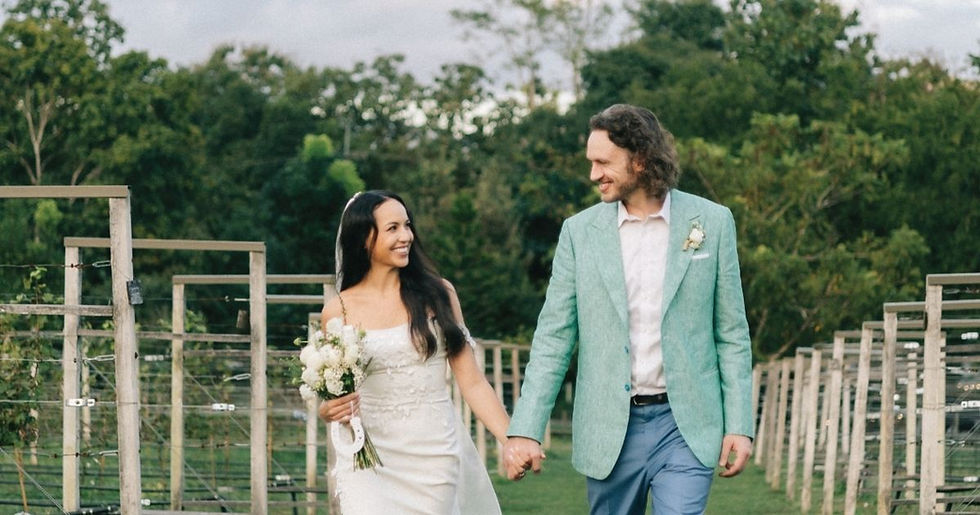
What the day looks like when the conditions are right
It is a cool December afternoon at the estate. The morning ran with enough time for the room to breathe. The gatecrash happened in the courtyard without anything needing to be contained. The tea ceremony was unhurried and the second photographer was already positioned on the grandmother when the lead moved to the couple. The ceremony happened in the late afternoon as the light over the Mae On valley began its slow shift toward gold.
Now the couple is standing in the vine rows with the mountain behind them and the light doing exactly what it does for 20 minutes at the end of every cool season day at this specific longitude: wrapping everything in the kind of warmth that twenty years from now will make people who look at the photograph feel the temperature of that afternoon.
The couple is not thinking about the photographs. They are thinking about each other. That is the condition that makes the photographs exceptional, not the camera, not the editing, not the venue's reputation. Just two people present in a place that earned its atmosphere, with nothing competing for their attention and nowhere else to be.
The photographer does not need to interfere. The lens simply records what is already there.
Explore vineyard weddings at Skugga Estate, read the best time to marry in Chiang Mai, and find the best photoshoot locations in northern Thailand.
Frequently asked questions
Does the venue need to have hosted weddings before for the photography to work?
No. What matters is that the photographer has visited the venue, or at a minimum studied it thoroughly, before the wedding day. An experienced documentary photographer will arrive early on the day to map light conditions, vantage points, and key locations across the estate. A venue with strong natural scenery and good light does not need a track record. It needs a photographer who has done their homework. That said, a venue with an experienced wedding team makes the day run more smoothly, which directly benefits the photography by reducing the timeline disruptions that damage coverage.
Does golden hour actually make that much difference?
Yes, and the gap between golden hour portraits and midday portraits is not subtle. Midday sun creates harsh shadows under eyes and across faces that require significant editing to soften and often cannot be fully corrected in post. Golden hour light is soft, warm, and directional, which means it flatters every skin tone naturally, requires no supplementary lighting, and produces the depth and warmth that makes portraits feel cinematic rather than documentary. Couples who protect a 20-minute window for golden hour portraits in their timeline consistently describe those images as their favourites from the entire day.
Is documentary photography right for every couple?
Not quite. Documentary photography works best for couples who are comfortable not being directed, who trust the photographer to observe rather than orchestrate, and who want images that feel like the day rather than images that perform a version of it. Couples who feel anxious about being photographed without guidance, or who want a specific set of formal portraits as the primary deliverable, may find a more editorial or traditional approach better suited to them. The honest test is this: when you look at a photographer's portfolio, do you want to be in those images, or do you want images that look like those images? The first instinct is usually the right one.

Comments