
Defying the Seasons: How the Mae On Climate Shapes Tropical Viticulture at Skugga Estate
- Skugga Editorial Team

- Apr 15
- 6 min read

Tropical viticulture, growing premium wine grapes in a hot, humid climate near the equator, is one of the most technically demanding disciplines in modern winemaking. Read a classic textbook on the subject and it will tell you it cannot be done. Traditional European vines require four distinct seasons: a freezing winter for dormancy, a mild spring to wake up, a warm summer to grow, and a cool autumn to ripen the fruit.
Mae On has none of that.
Northern Thailand's agricultural environment is defined by continuous ambient heat, heavy monsoon precipitation, and no naturally occurring dormancy period. Attempts to grow wine grapes in conditions like these have been made across the tropical world, from India's Nashik Valley to Vietnam's highlands to parts of Brazil, and the results are almost always a compromise between climate and craft.
At Skugga Estate in the Mae On district of Chiang Mai, the climate is not a problem to overcome. It is a system to understand and work within. Through elevation, canopy management, and precise cycle timing, the estate turns intense Thai weather into an agricultural asset rather than a liability. Here is how.

The 410-Metre Advantage
Skugga Estate sits at approximately 410 metres (1,345 feet) above sea level. In tropical viticulture, altitude is the primary mechanism for establishing a viable microclimate, and 410 metres makes a measurable difference.
The environmental lapse rate means that elevation translates to ambient temperatures roughly 3 to 4 degrees Celsius cooler than the valley floor below Chiang Mai city. That difference matters enormously. When temperatures spike beyond a threshold, grapevines close their leaf pores to prevent water loss, which halts photosynthesis and stalls ripening entirely. Skugga's elevation keeps the vines in a functional metabolic window across more of the year.
Altitude also amplifies diurnal temperature variation, the swing between the day's high and the night's low. Warm days drive sugar accumulation in the fruit. Cool nights slow the vine's metabolism, preserving the grape's natural acidity. That preserved acidity is one of the defining characteristics of what Skugga's wine programme is working toward as the vineyard, planted in 2025, matures.
The same valley that creates this microclimate also surrounds the estate with forest, which moderates wind exposure and maintains humidity at levels the vines can manage. Elevation alone does not make tropical viticulture viable, but without it, nothing else in this system works.

The Monsoon Season: Recovery, Not Production
Mae On's agricultural year divides into two distinct periods: a wet vegetative season from June to October, and a dry reproductive season from November to March. The southwest monsoon brings persistent humidity, heavy cloud cover, and sustained rainfall across those five months.
Attempting to ripen grapes during the monsoon produces poor results. Insufficient sunlight inhibits colour development, and heavy rainfall dilutes flavour concentration in the fruit. The monsoon period at Skugga is therefore treated as a recovery window, a time for the vine to rebuild energy rather than produce a crop.
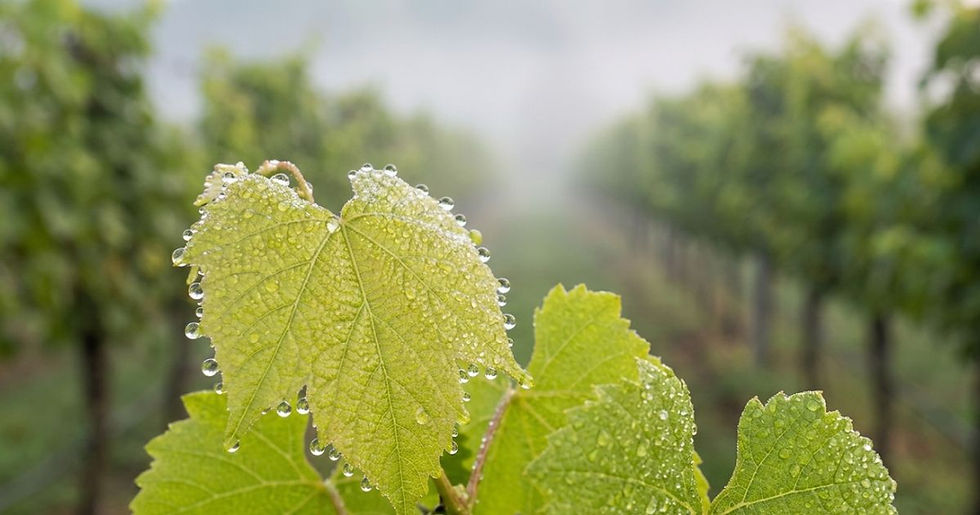
The primary challenge during this period is fungal disease pressure. Heat combined with saturated humidity creates conditions close to ideal for downy mildew and powdery mildew. The response is aggressive canopy management. Dense foliage traps humidity and allows fungal spores to take hold. Skugga's viticulture team executes intensive shoot thinning, maintaining a deliberately sparse canopy architecture that allows airflow through the vine. Prevailing winds pass freely, drying leaves quickly after rain and denying the conditions fungal pathogens need to establish.
This same period is when the estate's cacao and coffee programmes come into their own. The monsoon that complicates viticulture is ideal for cacao development, and the two crops complement each other across the seasonal calendar in ways that reinforce the estate's broader farming philosophy.
Why We Remove the Fruit
One of the more counterintuitive practices during the wet season is the manual removal of any grape clusters that begin to develop.
Grapevines operate on a sink-source dynamic. Developing fruit clusters are strong metabolic sinks, drawing significant energy from the plant to swell and ripen. Allowing the vine to spend its energy on ripening a low-quality monsoon crop would deplete the starch and carbohydrate reserves stored in the trunk and root system, weakening the vine, shortening its productive lifespan, and reducing the quality of the following dry season harvest.
Systematically removing flower clusters before they develop redirects that energy back into the permanent wood structure. The vine rebuilds its reserves. The sacrifice in the wet season is what makes the dry season harvest viable.
The December Cold Snap
Because Skugga prunes the vines to reset their cycle as the monsoon subsides in September and October, the fruit-bearing cycle aligns with the onset of the cool dry season. The defining event of the vintage typically arrives in December and January, when the Mae On highlands experience a pronounced cold snap driven by the northeast monsoon.
Under continuously high tropical temperatures, the vine's metabolism accelerates, pumping sugars into the berries faster than complex flavours and tannins can develop. The result is unbalanced, flat wine with excess alcohol. The cold snap applies a metabolic brake to the entire system.
Dropping the ambient temperature decelerates sugar accumulation, extending the time the fruit hangs on the vine before harvest. More importantly, cooler temperatures slow the respiration of malic acid. Organic acids are volatile, effectively burned away by the grape in sustained heat. Because Skugga times its pruning so that the pre-veraison phase coincides with this cold snap, the grapes retain their organic acids through to full ripeness. The result is fruit that arrives at harvest with both the sugar concentration and the natural acidity required for a balanced wine.
Tropical Viticulture vs the World's Other Warm-Climate Wine Regions
Skugga's approach sits within a small but growing body of tropical winemaking practice. India's Nashik Valley, at around 600 metres elevation, uses a similar two-harvest system and has produced internationally recognised wines since the 1990s. Vietnam's Da Lat plateau, at 1,500 metres, relies almost entirely on altitude to compensate for year-round heat. Brazil's São Francisco Valley uses irrigation and deliberate pruning cycles to produce two harvests per year in semi-arid tropical conditions.
What distinguishes Mae On is the combination of the December cold snap, which most tropical wine regions do not experience, and the surrounding highland forest, which moderates the microclimate in ways that pure elevation cannot replicate. Whether any of these regions will converge on a shared tropical winemaking identity over the coming decades is one of the more interesting questions in the global wine world. Skugga is at the beginning of that story.
The vines planted in 2025 are young. The estate's wine programme is developing, and the first estate-grown vintages are still some years away. In the meantime, the estate offers a curated selection of wines chosen to reflect the style and balance the viticulture team is working toward, alongside wine tasting and fine dining experiences that give visitors a clear sense of where the programme is headed.
What Tropical Viticulture Actually Requires
Growing premium grapes in this environment is not a romantic approximation of European winemaking. It is a labour-intensive, precision-driven discipline that requires constant intervention and a clear understanding of what the climate will and will not provide.
Skugga's approach, working with the monsoon rather than against it, using elevation to extend the viable growing window, and timing the productive cycle to capture the highland cold snap, is what allows a vineyard to exist in Mae On at all. The climatological framework that will shape every future vintage is already in place.
To visit the vineyard and see the estate's growing programme in person, book a table or tasting experience at Skugga Estate, or contact the team at vineyard@skuggalife.com.
Frequently Asked Questions
Can wine grapes actually grow in Thailand?
Yes. Wine grapes can be grown in Thailand using tropical viticulture techniques that account for the absence of a cold winter dormancy period. The approach relies on altitude to moderate temperatures, strategic pruning to align the fruit-bearing cycle with the dry season, and intensive canopy management to control fungal disease during the monsoon months. Skugga Estate in Mae On, Chiang Mai, planted its vineyard in 2025 and is developing its wine programme around these principles.
What elevation is Skugga Estate's vineyard?
Skugga Estate's vineyard sits at approximately 410 metres (1,345 feet) above sea level in the Mae On district of Chiang Mai. This elevation keeps ambient temperatures 3 to 4 degrees Celsius cooler than the Chiang Mai valley floor, which is essential for managing heat stress in the vines and preserving natural acidity in the fruit.
When is the harvest season at Skugga Estate?
Skugga Estate's harvest season falls in the dry months, broadly from November through to February or March, with the critical ripening period timed to coincide with the December and January cold snap driven by the northeast monsoon. This timing preserves natural acidity in the grapes and allows complex flavours to develop before harvest.
What grape varieties is Skugga Estate planting?
Skugga Estate's varietal programme is developing as the vines mature. The estate's viticulture team, with roots in New Zealand winemaking, is selecting varieties suited to tropical growing conditions and the specific microclimate of Mae On. Details on varieties will be shared as the programme develops.
What wines can I taste at Skugga Estate now?
While the estate-grown vines mature, Skugga Estate offers a curated selection of wines chosen to reflect the style, balance, and character the viticulture team is working toward. These are available alongside the estate's fine dining and wine tasting experiences.
Contact the team at vineyard@skuggalife.com or call +66 81 146 2652 to book.


Comments